
Bile Duct Cancer
Cancer Conditions
- 270 West Peachtree Street Northwest Suite 1300, Atlanta, GA 30303, USA(800) 227-2345https://www.cancer.org/cancer/types/bile-duct-cancer/about/what-is-bile-duct-cancer.html
Bile Duct Cancer
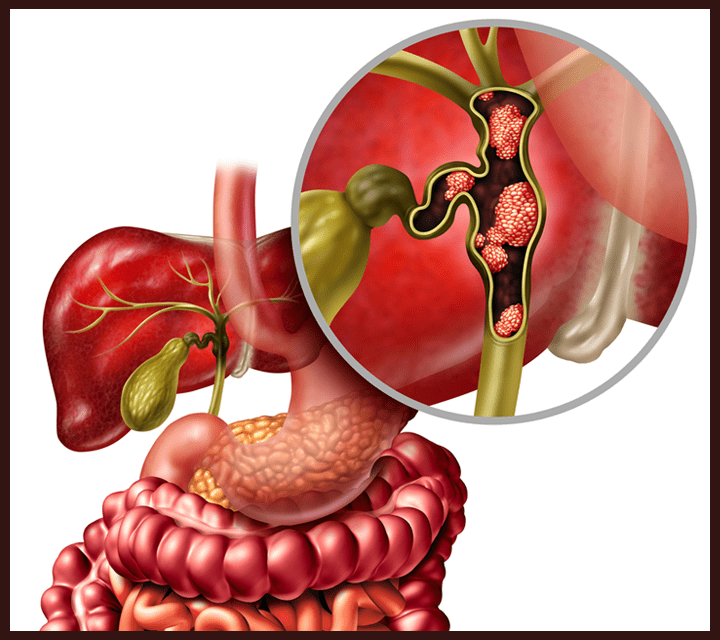
Bile duct cancer (also known as cholangiocarcinoma) is a type of cancer that starts in a bile duct. It can start in any part of the bile duct system.
About the bile ducts
To understand bile duct cancer, it helps to know about the bile ducts and what they normally do.
Bile is a fluid made in your liver and stored in your gallbladder. Your bile ducts are a series of thin tubes that carry bile from your liver and gallbladder into your small intestine, where the bile helps digest the fats in food. Bile also helps your body get rid of waste material that is filtered out of the bloodstream by your liver.
Different parts of the bile duct system have different names. In the liver, the bile duct system begins as many tiny tubes (called ductules). The ductules come together to form small tubes called ducts. These small ducts merge into larger ducts and then merge again to form the left and right hepatic ducts. All of these ducts within the liver are called intrahepatic bile ducts.
The left and right hepatic ducts exit the liver and join to form the common hepatic duct. Bile ducts located outside the liver are called extrahepatic bile ducts.
The gallbladder is a small organ that stores bile. It is located below the liver. It is connected to the common hepatic duct via the cystic duct. These come together to form the common bile duct. The common bile duct passes through part of the pancreas before it joins with the pancreatic duct and empties into the duodenum (first part of the small intestine) at the Ampulla of Vater.
What Is Cancer?
Cancer starts when cells in the body begin to grow out of control. Cells in nearly any part of the body can become cancer cells. Learn more here.
Anatomy Gallery: Digestive System
Explore our 3D interactive tour of the digestive system.
Types of bile duct cancers by location
Bile duct cancer (cholangiocarcinoma) can start in any part of the bile duct system. Depending on where the cancer starts, it is either an intrahepatic cholangiocarcinoma or an extrahepatic cholangiocarcinoma.
Intrahepatic cholangiocarcinoma
Intrahepatic bile duct cancers start in the smaller bile duct branches within the liver. They make up about 10% of all bile duct cancers. Sometimes, intrahepatic bile duct cancers are confused with hepatocellular carcinoma, a cancer that starts in the liver cells. But these are two different types of cancer, and they are treated differently.
Extrahepatic cholangiocarcinoma
There are two types of extrahepatic cholangiocarcinoma: perihilar duct cancer and distal duct cancer.Perihilar bile duct cancers are found in the hilar region of the bile duct system. The hilar region is where the left and right hepatic ducts leave the liver and join to form the common hepatic duct. Perihilar duct cancers are also called Klatskin tumors.
Distal duct cancers are found along the common bile duct. The common bile duct starts where the common hepatic duct joins with the cystic duct (from the gallbladder) and extends through the pancreas and into the small intestine at the Ampulla of Vater.
Cancers that start in different parts of the bile ducts can cause different symptoms.
Types of bile duct cancer by cell type
Bile duct cancers can also be divided into types based on how the cancer cells look under the microscope.Nearly all bile duct cancers are cholangiocarcinomas (a type of adenocarcinoma, which is a cancer that starts in gland cells). Cholangiocarcinomas start in the gland cells that line the inside of the ducts.
Other types of bile duct cancers are much less common. These include sarcomas, lymphomas, and small cell cancers. Our information does not cover these rare types of bile duct cancer.
Benign bile duct tumors
Not all bile duct tumors are cancer. For example, bile duct hamartomas and bile duct adenomas are types of benign (non-cancer) tumors.
Other cancers in the liver
The most common type of cancer that starts in the liver is hepatocellular carcinoma. This type of cancer starts in the main cells that make up the liver. It is more common than cholangiocarcinoma.Cancers that start in other organs, such as the colon or rectum, can sometimes spread (metastasize) to the liver. These metastatic cancers are not true liver cancers. For example, colorectal cancer that has spread to the liver is still colorectal cancer, not liver cancer.
The treatment and outlook for cancer that metastasizes to the liver is not the same as for a cancer that starts in the liver. For this reason, it’s important to know whether a tumor in the liver started in bile ducts (cholangiocarcinoma), if it started in the liver tissue itself (hepatocellular carcinoma), or if it started in another organ and has spread to the liver.
Questions to Ask Your Doctor About Bile Duct Cancer
It's important to have honest, open discussions with your cancer care team. They want to answer all your questions, no matter how minor they might seem. Don't be afraid to ask them. Below is a list of questions to get you started.
When you’re told you have bile duct cancer
- What type of bile duct cancer do I have? Where is it located?
- Has my cancer spread beyond the bile ducts?
- What is the stage of my cancer, and what does that mean in my case?
- What is my prognosis (outlook)?
- Do I need other tests before we consider treatment options?
- Do I need to see any other kinds of doctors?
- How much experience do you have treating this type of cancer?
- Should I get a second opinion?
When deciding on a treatment plan
- What are my treatment options?
- Can my cancer be removed with surgery?
- What treatment do you recommend and why?
- What is the goal of treatment?
- What risks or side effects are there to the treatments you suggest? How long are they likely to last?
- How quickly do we need to decide on treatment?
- What should I do to be ready for treatment?
- How long will treatment last? What will it be like? Where will it be done?
- How will treatment affect my daily activities?
- What are the chances my cancer can be cured with these treatment plans?
During treatment
- How will we know if the treatment is working?
- Is there anything I can do to help manage side effects?
- What symptoms or side effects should I tell you about right away?
- How can I reach you on nights, holidays, or weekends?
- Do I need to change what I eat during treatment?
- Are there any limits on what I can do?
- Can you suggest a mental health professional I can see if I start to feel overwhelmed, depressed, or distressed?
After treatment
- What would my options be if the treatment doesn’t work or if the cancer comes back?
- What type of follow-up might I need after treatment?
- What long-term side effects or late effects should I expect?
- Where can I get more information and support?
Keep in mind that doctors are not the only ones who can give you information. Other health care professionals, such as nurses and social workers, can answer some of your questions.
Additional Information
- Surgery for Bile Duct Cancer
- Radiation Therapy for Bile Duct Cancer
- Chemotherapy for Bile Duct Cancer
- Targeted Drug Therapy for Bile Duct Cancer
- Immunotherapy for Bile Duct Cancer
- Palliative Therapy for Bile Duct Cancer
- Treatment Options Based on the Extent of Bile Duct Cancer
- Health Professionals Who Are Part of a Cancer Care Team
- About Bile Duct Cancer
- Causes, Risk Factors, and Prevention
- Early Detection, Diagnosis, and Staging
- Can Bile Duct Cancer Be Found Early?
- Signs and Symptoms of Bile Duct Cancer
- Tests for Bile Duct Cancer
- Bile Duct Cancer Stages
- Questions to Ask About Bile Duct Cancer
- Survival Rates for Bile Duct Cancer
- Treating Bile Duct Cancer
- After Treatment
- If You Have Bile Duct Cancer