
Carpal Tunnel Syndrome (CTS)
Neurological Conditions
Carpal Tunnel Syndrome (CTS)
Your hands function as precise communication tools between your brain and the world. Every motion—gripping, typing, lifting, writing—relies on rapid electrical signals traveling through the median nerve, which passes through a narrow passage in the wrist called the carpal tunnel. When this space becomes crowded or its internal pressure increases, the median nerve becomes compressed, disrupting its ability to transmit normal sensation and control fine motor movement.
This is known as Carpal Tunnel Syndrome (CTS), the most common entrapment neuropathy worldwide.
CTS may start subtly intermittent tingling, a numb thumb on waking, dropping objects, but, without the right care, it can progress to constant numbness, hand weakness, and even permanent loss of thumb muscle bulk. The good news: CTS is highly treatable. Splints, ergonomic strategies, injections, and—when necessary—surgery can provide lasting relief and prevent further nerve damage.
Use this condition center to learn what CTS is, how it’s diagnosed and treated, and how to partner effectively with your care team.
Questions to Ask Your Doctor
If you’ve been diagnosed with CTS—or are being evaluated for it—these questions can help align you and your healthcare team:
• Is my condition definitely CTS, or could my symptoms be coming from my neck, shoulder, or another nerve problem?
• How severe is my CTS on examination or nerve testing? Is there evidence of nerve injury?
• What factors might be contributing—repetitive activity, ergonomics, diabetes, thyroid issues, inflammation?
• Should I start with conservative care such as splinting or therapy? For how long?
• Would a corticosteroid injection help confirm the diagnosis or reduce symptoms?
• What is the risk of permanent nerve damage if I delay treatment?
• When is surgery recommended, and what are the expected outcomes?
• How long is recovery, and how soon can I return to work or daily activities?
• What ergonomic changes should I make at work or home to prevent recurrence?
• How often should I follow up, and what symptoms should prompt earlier reassessment?
Overview
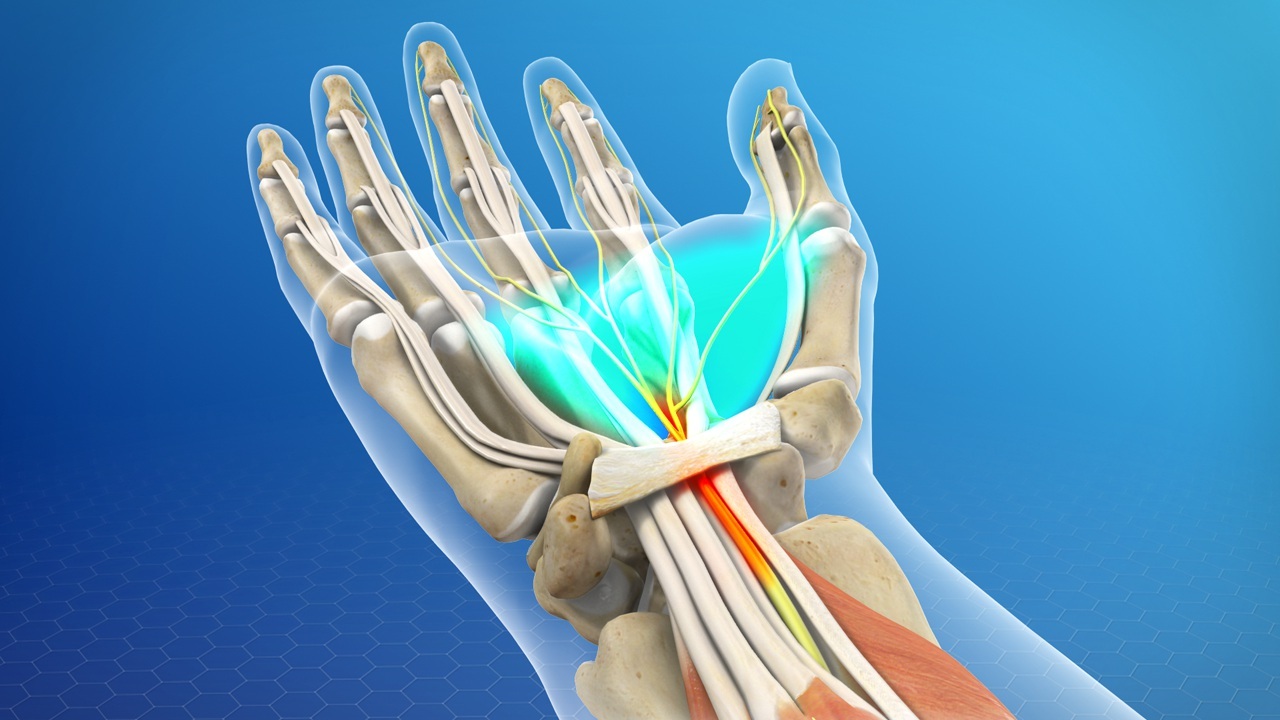
Carpal Tunnel Syndrome occurs when the median nerve becomes compressed within the rigid walls of the carpal tunnel—a narrow, bony canal in the wrist. Inside this tunnel are nine flexor tendons and the median nerve; any swelling, inflammation, or structural narrowing increases pressure on the nerve.
Early on, symptoms are intermittent and often reversible. Over time, however, constant compression can cause progressive sensory loss, motor impairment, and atrophy of the thumb muscles.
Although CTS can be frustrating and disruptive, treatment outcomes are excellent when the condition is recognized early and managed proactively. Evidence supports:
• Nighttime splinting in a neutral position
• Activity and ergonomic modification to reduce repetitive wrist strain
• Timely steroid injections for inflammation-driven CTS
• Early referral for nerve conduction studies when symptoms persist
• Surgical decompression for moderate-to-severe or progressive disease
• Addressing systemic conditions such as diabetes, thyroid disease, and arthritis
What Is CTS?
CTS is a focal entrapment neuropathy of the median nerve at the wrist. As pressure within the carpal tunnel increases, the nerve’s blood supply is reduced, conduction slows, and sensory fibers are the first to malfunction. Over time, motor fibers also weaken, leading to impaired thumb function.
Sensory symptoms often begin in the median-innervated digits:
• Thumb
• Index finger
• Middle finger
• Radial half of the ring finger
Motor symptoms appear later and reflect weakness in thumb abduction and opposition, making it harder to grasp objects, open lids, write, or perform fine motor tasks. Severe or longstanding compression can lead to thenar muscle atrophy, often visible at the base of the thumb.
What Makes CTS More Likely?
CTS results from multifactorial causes, including:
Anatomical or biomechanical factors
• Repetitive wrist flexion or extension
• Prolonged gripping or vibrating tool use
• Wrist fractures, arthritis, or structural narrowing
• Tendon sheaths thickening from overuse or inflammation
Medical/Systemic conditions
• Diabetes
• Hypothyroidism
• Obesity
• Inflammatory arthritis (e.g., rheumatoid arthritis)
• Pregnancy-related fluid retention
• Chronic kidney disease or dialysis-related amyloidosis
Lifestyle and occupational patterns
• High-volume keyboard/mouse use
• Forceful repetitive manual tasks
• Poor wrist posture during work or sleep
Although CTS is more common in women and typically arises in midlife, it can affect anyone whose median nerve is exposed to increased tunnel pressure.
Early Recognition Matters
CTS is a progressive condition. Earlier intervention helps prevent irreversible nerve injury.
Recognizing CTS early allows you and your care team to:
• Reduce nighttime symptoms with splinting
• Modify aggravating activities before structural damage occurs
• Perform nerve conduction studies to measure severity
• Begin targeted treatment to prevent muscle wasting
• Consider surgical decompression before permanent deficits develop
Seek urgent evaluation if you notice:
• Constant numbness (not intermittent)
• Worsening hand weakness
• Visible thenar muscle atrophy
• Difficulty gripping objects or frequent dropping
Signs and Symptoms
CTS symptoms vary based on severity and duration but often include:
Sensory symptoms
• Tingling or numbness in the thumb, index, middle, and part of the ring finger
• Nighttime symptoms causing awakening and need to “shake out” the hand
• Burning or radiating pain up the forearm
• Decreased ability to discriminate shapes, textures, or temperature
Motor symptoms
• Weak grip or pinch strength
• Difficulty opening jars, turning keys, or buttoning clothes
• Dropping objects
• Thumb clumsiness
• Thenar muscle wasting in advanced cases
Atypical symptoms suggesting alternate or comorbid pathology:
• Pain radiating to the shoulder or neck
• Numbness involving the little finger (suggesting ulnar or cervical involvement)
Exams and Tests
Diagnosis is based on a combination of clinical evaluation and testing:
Physical Examination
• Tinel’s sign (tapping over the median nerve)
• Phalen’s maneuver (wrist flexion to reproduce symptoms)
• Durkan’s compression test
• Strength assessment of thumb abduction/opposition
• Sensory testing of median-innervated digits
• Inspection for thenar atrophy
Electrodiagnostic Testing (NCS/EMG)
The gold standard for diagnosis.
Nerve conduction studies evaluate:
• Distal latency delay
• Slowed conduction velocity across the wrist
• Reduced sensory amplitudes
EMG identifies:
• Chronic median nerve injury
• Denervation in thenar muscles
• Coexisting radiculopathy or plexopathy
Imaging (when indicated)
• Ultrasound to assess median nerve swelling
• MRI to evaluate structural abnormalities or atypical symptoms
Laboratory work may be considered to assess systemic contributors:
• Thyroid function
• Blood glucose/HbA1c
• Vitamin B12
• Inflammatory markers
Treatment
CTS treatment focuses on relieving pressure on the median nerve, reducing inflammation, restoring function, and preventing permanent injury.
1. Conservative Management
Splinting
• Neutral wrist splints worn at night
• May also be used during daytime repetitive tasks
Activity/Ergonomic Modification
• Adjust keyboard, mouse, and wrist posture
• Reduce repetitive gripping and vibratory tasks
• Use supportive wrist rests and proper workstation design
Medications
• NSAIDs for pain relief
• Oral steroids for short-term symptom reduction in selected cases
Hand Therapy
• Median nerve gliding exercises
• Tendon gliding programs
• Strengthening and ergonomic training
2. Corticosteroid Injection
A local steroid injection into the carpal tunnel can:
• Reduce inflammation around the nerve
• Provide weeks to months of symptom relief
• Aid in diagnosis (improvement strongly supports CTS)
Injections are safe and effective but are not a long-term cure for most patients.
3. Surgical Treatment
Carpal Tunnel Release
Indicated for:
• Moderate-to-severe CTS on nerve studies
• Progressive weakness or muscle atrophy
• Persistent symptoms despite conservative care
Both open and endoscopic techniques relieve pressure by dividing the transverse carpal ligament.
Success rates exceed 90% when performed in appropriate candidates.
Recovery
• Nighttime symptoms often improve immediately
• Strength returns gradually over weeks to months
• Advanced, longstanding nerve damage may be partially reversible
Living With CTS
With appropriate treatment, most individuals regain normal or near-normal hand function. Maintaining long-term nerve health includes:
• Optimizing ergonomics at work and home
• Monitoring and managing systemic conditions
• Avoiding repetitive strain and extreme wrist positions
• Seeking early evaluation if symptoms recur
References & Public Resources
Palmbergen WAC, Beekman R, Heeren AM, et al. Surgery Versus Corticosteroid Injection for Carpal Tunnel Syndrome (DISTRICTS): An Open-Label, Multicentre, Randomised Controlled Trial. The Lancet. 2025;405(10495):2153-2163.
https://pubmed.ncbi.nlm.nih.gov/40517008
Wipperman J, Penny ML. Carpal Tunnel Syndrome: Rapid Evidence Review. American Family Physician. 2024;110(1):52-57.
https://www.aafp.org/link_out?pmid=39028782**
Ashworth NL, Bland JD, Chapman KM, et al. Local Corticosteroid Injection Versus Surgery for Carpal Tunnel Syndrome. The Cochrane Database of Systematic Reviews. 2024;8:CD015101.
https://pubmed.ncbi.nlm.nih.gov/39206746
American Academy of Orthopaedic Surgeons. Management of Carpal Tunnel Syndrome: Evidence-Based Clinical Practice Guideline. Published May 2024.
https://www.aaos.org/quality/quality-programs/upper-extremity-programs/carpal-tunnel-syndrome/
Yang FA, Wang HY, Kuo TY, et al. Injection Therapy for Carpal Tunnel Syndrome: A Systematic Review and Network Meta-Analysis of Randomized Controlled Trials. PLoS One. 2024;19(5):e0303537.
https://pubmed.ncbi.nlm.nih.gov/38753671
Lusa V, Karjalainen TV, Pääkkönen M, et al. Surgical Versus Non-Surgical Treatment for Carpal Tunnel Syndrome. The Cochrane Database of Systematic Reviews. 2024;1:CD001552.
https://pubmed.ncbi.nlm.nih.gov/38189479
Padua L, Cuccagna C, Giovannini S, et al. Carpal Tunnel Syndrome: Updated Evidence and New Questions. The Lancet Neurology. 2023;22(3):255-267.
https://pubmed.ncbi.nlm.nih.gov/36525982
Ashworth NL, Bland JDP, Chapman KM, et al. Local Corticosteroid Injection Versus Placebo for Carpal Tunnel Syndrome. The Cochrane Database of Systematic Reviews. 2023;2:CD015148.
https://pubmed.ncbi.nlm.nih.gov/36722795
Karjalainen TV, Lusa V, Page MJ, et al. Splinting for Carpal Tunnel Syndrome. The Cochrane Database of Systematic Reviews. 2023;2:CD010003.
https://pubmed.ncbi.nlm.nih.gov/36848651
Currie KB, Tadisina KK, Mackinnon SE. Common Hand Conditions: A Review. JAMA. 2022;327(24):2434-2445.
https://jamanetwork.com/journals/jama/fullarticle/2793415
Source: https://www.premierneurohealth.com/