
Electrophysiology
Heart Procedures
Electrophysiology
Electrophysiology heart conditions include
Arrhythmias, also known as heart rhythm disorders, occur when there is a change in the normal rate or rhythm of the heartbeat. They are generally caused by abnormalities in the heart's electrical system.
Cardiac arrhythmias can be complex medical conditions with effects ranging from annoying to life-threatening. Heart arrhythmias include:
- Atrial fibrillation
- Atrial flutter
- Atrioventricular block (also known as heart block)
- Long QT syndrome
- Pacemaker/ICD malfunction
- Paroxysmal supraventricular tachycardia (PSVT)
- Rhythm disorders related to heart failure
- Premature atrial contraction
- Sick sinus syndrome
- Sinus tachycardia
- Sinus bradycardia
- Sudden cardiac death prevention
- Ventricular fibrillation
- Ventricular tachycardia
Diagnostic and treatment services
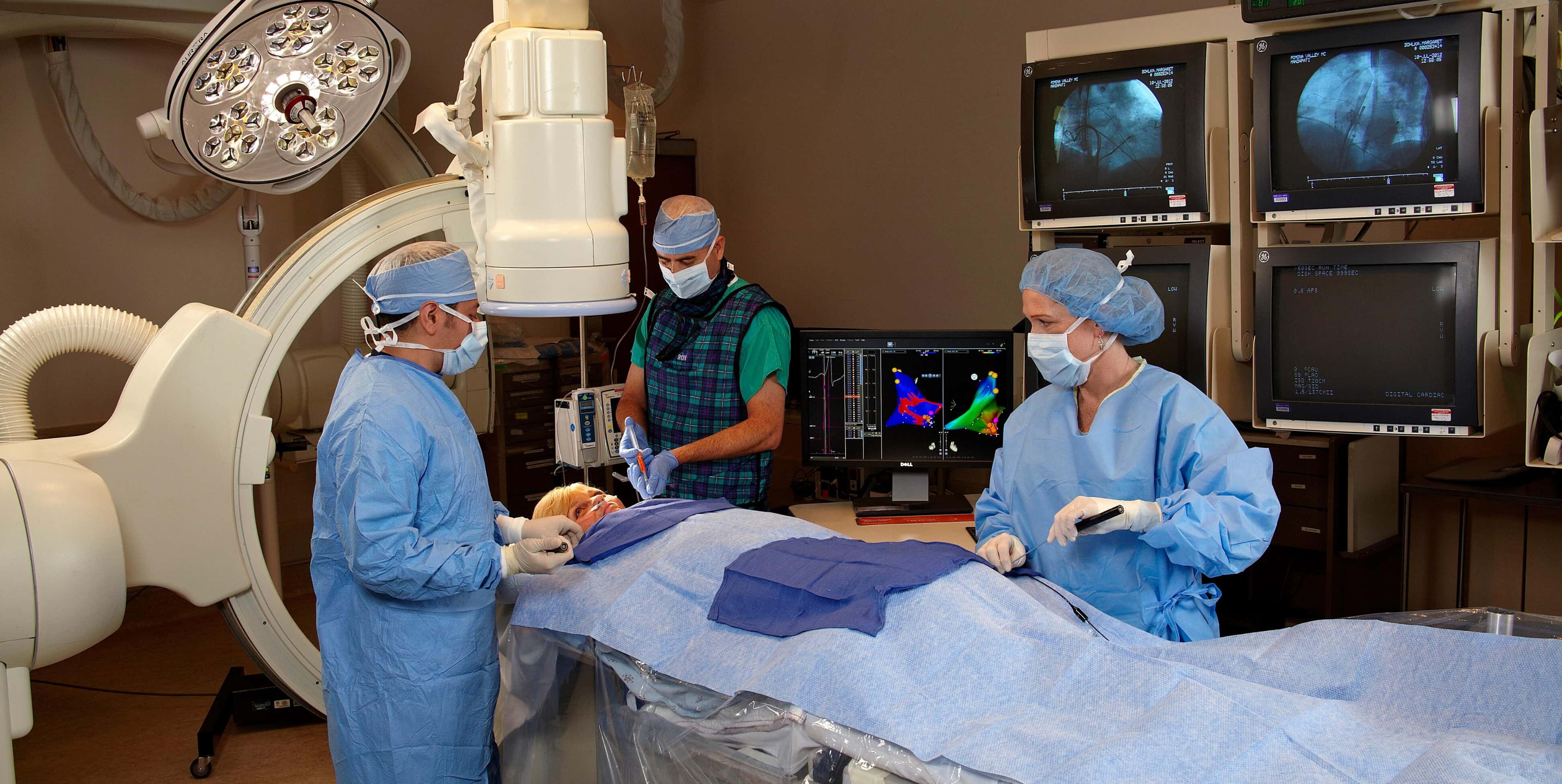
Although some arrhythmias can be managed by medication, others may require surgery. Electrophysiologists are experts at both traditional open surgeries and minimally invasive procedures.Minimally invasive surgeries use small incisions and precisely directed catheter-based tools to treat heart rhythm disorders. Heart patients usually benefit from these less-invasive procedures through shorter recovery time, smaller incisions and better outcomes.
- Atrial fibrillation management
- Cardiac resynchronization therapy
- Diagnostic heart monitoring
- Holter monitor
- Event monitoring
- Remote mobile cardiac outpatient telemetry monitoring
- Electrophysiology study
- Lead management and extraction
- Maze procedure
- Pacemaker and bi-ventricular pacemaker implantation
- Radiofrequency ablation
- Sudden cardiac death assessment and evaluation
- Supraventricular tachycardia (SVT) ablation
- Syncope evaluation and management, including tilt table testing
- Ventricular fibrillation and tachycardia management and ablation
- Zero-fluoroscopy ablation