
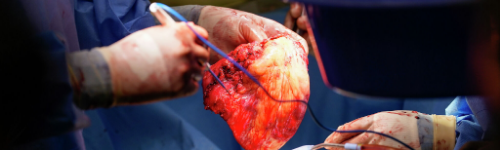
Heart Transplant
Heart Procedures
Heart Transplant
A heart transplant is an operation in which a failing heart is replaced with a healthier donor heart. Heart transplant is a treatment that's usually reserved for people whose condition hasn't improved enough with medications or other surgeries.
While a heart transplant is a major operation, your chance of survival is good with appropriate follow-up care.
Why it's done
Heart transplants are performed when other treatments for heart problems haven't worked, leading to heart failure. In adults, heart failure can be caused by:
- A weakening of the heart muscle (cardiomyopathy)
- Coronary artery disease
- Heart valve disease
- A heart problem you're born with (congenital heart defect)
- Dangerous recurring abnormal heart rhythms (ventricular arrhythmias) not controlled by other treatments
- Failure of a previous heart transplant
In children, heart failure is most often caused by either a congenital heart defect or cardiomyopathy.
Another organ transplant may be performed at the same time as a heart transplant (multiorgan transplant) in people with certain conditions at select medical centers.
Multiorgan transplants include:
- Heart-kidney transplant. This procedure may be an option for some people with kidney failure in addition to heart failure.
- Heart-liver transplant. This procedure may be an option for people with certain liver and heart conditions.
- Heart-lung transplant. Rarely, doctors may suggest this procedure for some people with severe lung and heart diseases if the conditions cannot be treated with only a heart transplant or a lung transplant.
A heart transplant is not right for everyone, however. You might not be a good candidate for a heart transplant if you:
- Are at an advanced age that would interfere with the ability to recover from transplant surgery
- Have another medical condition that could shorten your life, regardless of receiving a donor heart, such as a serious kidney, liver or lung disease
- Have an active infection
- Have a recent personal medical history of cancer
- Are unwilling or unable to make lifestyle changes necessary to keep your donor heart healthy, such as not using recreational drugs, not smoking and limiting alcohol use
Ventricular assist devices
Left ventricular assist device (LVAD)
For some people who cannot have a heart transplant, another option may be a ventricular assist device (VAD). A VAD is a mechanical pump implanted in your chest that helps pump blood from the lower chambers of your heart (ventricles) to the rest of your body.
VADs are commonly used as temporary treatments for people waiting for heart transplants. These devices are increasingly being used as long-term treatment for people who have heart failure but are not eligible for heart transplants. If a VAD doesn't help your heart, doctors may sometimes consider a total artificial heart — a device that replaces the ventricles of your heart — as an alternative short-term treatment while you're waiting for a heart transplant.
Risks
Besides the risks of having open-heart surgery, which include bleeding, infection and blood clots, risks of a heart transplant include:
Rejection of the donor heart. One of the most worrying risks after a heart transplant is your body rejecting the donor heart.
Your immune system may see your donor heart as a foreign object and try to reject it, which can damage the heart. Every heart transplant recipient receives medications to prevent rejection (immunosuppressants), and as a result, the rate of organ rejection continues to decrease. Sometimes, a change in medications will halt rejection if it occurs.
To help prevent rejection, it's critical that you always take your medications as prescribed and keep all your appointments with your doctor.
Rejection often occurs without symptoms. To determine whether your body is rejecting the new heart, you'll have frequent heart biopsies during the first year after your transplant. After that, you won't need biopsies as often.
- Primary graft failure. With this condition, the most frequent cause of death in the first few months after transplant, the donor heart doesn't function.
- Problems with your arteries. After your transplant, it's possible that the walls of the arteries in your heart could thicken and harden, leading to cardiac allograft vasculopathy. This can make blood circulation through your heart difficult and can cause a heart attack, heart failure, heart arrhythmias or sudden cardiac death.
- Medication side effects. The immunosuppressants you'll need to take for the rest of your life can cause serious kidney damage and other problems.
- Cancer. Immunosuppressants can also increase your risk of developing cancer. Taking these medications can put you at a greater risk of skin cancer and non-Hodgkin's lymphoma, among others.
- Infection. Immunosuppressants decrease your ability to fight infection. Many people who have heart transplants have an infection that requires them to be admitted to the hospital in the first year after their transplant.
How you prepare
Preparations for a heart transplant often begin weeks or months before you receive a donor heart.
Taking the first steps
If your doctor recommends a heart transplant, you'll likely be referred to a heart transplant center for evaluation. Or you can select a transplant center on your own. Check your health insurance to see which transplant centers are covered under your plan.
When evaluating a heart transplant center, consider the number of heart transplants a center performs each year and the survival rates. You can compare transplant center statistics using a database maintained by the Scientific Registry of Transplant Recipients.
You should also check to see if a transplant center offers other services you might need. These include coordinating support groups, assisting with travel arrangements, helping you find local housing for your recovery period or directing you to organizations that can help with these concerns.
Once you decide on a center, you'll need to have an evaluation to see if you're eligible for a transplant. The evaluation will check to see if you:
- Have a heart condition that would benefit from transplantation
- Might benefit from other, less aggressive treatment options
- Are healthy enough to undergo surgery and post-transplant treatments
- Will agree to quit smoking, if you smoke, and stop using alcohol and recreational drugs
- Are willing and able to follow the medical program outlined by the transplant team
- Can emotionally handle the wait for a donor heart
- Have a supportive network of family and friends to help you during this stressful time
Waiting for a donor organ
If the transplant center medical team determines that you're a good candidate for a heart transplant, the center will put you on a waiting list. The wait can be long since there are more people who need hearts than donors. Finding a donor depends on your size, your blood type and how sick you are.
While you're on the waiting list, your medical team will monitor your heart and other organs and adjust your treatment as necessary. The team will help you learn to care for your heart by eating well and being active.
If medical therapy fails to support your vital organs as you wait for a donor heart, your doctors might recommend that you have a ventricular assist device (VAD) implanted to support your heart while you wait for a donor organ. The devices are also referred to as bridges to transplantation because they gain you some time to wait until a donor heart is available.
Immediately before your transplant surgery
A heart transplant usually needs to occur within four hours of organ removal for the donor organ to remain usable. As a result, hearts are offered first to a transplant center close by and then to centers within certain distances of the donor hospital.
The transplant center can provide you with a pager or cellphone to notify you when a potential heart is available. You must keep your cellphone or pager charged and turned on at all times.
Once you're notified, you and your transplant team have limited time to accept the donation. You'll have to go to the transplant hospital immediately after being notified.
As much as possible, make travel plans ahead of time. Some heart transplant centers provide private air transportation or other travel arrangements. Have a suitcase packed with everything you'll need for your hospital stay, as well as an extra 24-hour supply of your medications.
Once you arrive at the hospital, your doctors and transplant team will conduct a final evaluation to determine if the donor heart is suitable for you and if you're ready for surgery. If your doctors and transplant team decide that either the donor heart or surgery isn't appropriate for you, you might not be able to have the transplant.
Transporting donor organs for transplant
Doctors and staff can receive donor organs from other locations and transport them to prepare them for transplantation.
Source: https://www.mayoclinic.org/tests-procedures/heart-transplant/about/pac-20384750